Pages

Sunday, September 5, 2010

The Doors: Celebration of the Lizard and Other Voices


So much has been written about this iconic band that I won't try to match or copy what's already been said many times over. Instead I'd like to focus on two pieces of music which perhaps haven't received as much attention. In this post I'm going to focus on the long-format song called The Celebration of the Lizard only parts of which saw a studio album release, and the post-Morrison album Other Voices (1971) which was released just after L.A. Woman.

First off, let me say that The Doors were a major influence on my musical discovery and even now I return to their music from time to time and remain in awe of it. How exciting it must have been to have lived during their heyday. The Doors are famous for many things, one of them being a trio of long-format songs: The End, When the Music's Over, and The Soft Parade. There is a fourth extended song cycle which ought to be added to this assortment: The Celebration of the Lizard. This song is roughly 20 minutes long and a tour de force at that. It was intended to be a whole side of their third album Waiting for the Sun (1968). Instead only parts of it were included on the album most notably the song called Not to Touch the Earth. I've not been able to find the specific reason for this but I think that most likely Jim Morrison was a big supporter of the entire Lizard cycle being included as it does showcase his evocative poetry (and performance) while the rest of the band and/or record company saw it as uncommercial. Would have been amazing though since I can't think of any band in 1968 dedicating a full half an LP to a single musical idea. All that aside the Lizard exists as at least two live versions. The best of all has to be the one included on the Absolutely Live album (1970) and another version almost as good is included in The Doors boxed set (recorded in New York). The piece is epic and poetic closer to a spoken word performance than a musical one at times although the section called The Hill Dwellers has to be my favorite section as it's a mesmerizing union of both.

Now the second part of this post: Other Voices. When Jim Morrison moved to Paris in early 1971 after finishing recording L.A. Woman the rest of the band continued to rehearse material for the next album. Apparently Morrison was involved with early version of several song which would be released after his death later that year. As such this album represents probably the best indication of where The Doors music was headed.

After listening to selections from the album I'm left with two distinct feelings: One, the band was clearly going to continue writing blues-influenced rock music for a while. Two, the band in general was very unhappy around this time and was clearly under the dark cloud Morrison had cast. Had he lived a few years longer I think we would have heard touching but sad music sounding more like a farewell than the welcoming of new consciousnesses. Case in point is probably the best track on the album, Ships with Sails. Ray Manzarek (keyboard player) takes lead vocals on this track and delivers the lyrics with a gravitas akin to the late Morrison's. The song is kind of like a combination between Riders on the Storm and Spanish Caravan with a percussion section which almost sounds like something Santana would have done.

SONGS


Part one of The Celebration of the Lizard


Part two of the Celebration of the Lizard


Ships with Sails

Sunday, August 1, 2010

Skinny Puppy


If I had to choose one industrial music band to represent the genre I might have to pick this Vancouver, BC based group. Skinny Puppy began around 1982 and have been producing music more or less ever since. There have been very few lineup changes, the most significant of which however was the tragic death of longtime member Dwayne Goettel in 1995. A long legacy of fascinating albums span the bands history but arguably their best material comes from the albums released between 1988 - 1992.

Harsh, beat-driven soundscapes with frightening vocal performances and movie samples is typical of their music, although some of their early material is interesting for its softer synthesizer touches and quieter moments. Listen to outtakes from their Brap: Vol 3 & 4 release. Listen also to tracks like Dig It , Deep Down Trauma Hounds, and Addiction for examples of the influence this band had on the likes of Nine Inch Nails and others.

Let's take a look at some of the key tracks from this highly influential band, concentrating on their late 80s material:

  • VX Gas Attack - From VIVIsectVI (1988). A sonic account of the Iran-Iraq war from the late 80's (ironic now because remember that we were backing Saddam Hussein at the time) specifically about a chemical weapon attack. This album also marked a more modern and focused sound for the band.

  • Worlock - From Rabies (1988). Rabies is a really great album and probably the best one to start with as it is mostly comprised of synth-and-guitar laden tracks without many harsh or dissonant sections. Al Jourgensen of Ministry was heavily involved on this album and some fans see this as more of a side-project album than a Puppy album but either way it's great. Worlock is particularly fine.

  • Spasmolytic - From Too Dark Park (1990). A fascinating track (along with Tormentor from the same album) featuring heavy synth bass and a sonic clarity not heard on their previous albums. Partially I think this is due to advances in digital recording and partially their composition and arrangements skills had had plenty of time to mature. Too Dark Park is a more challenging album to appreciate at first blush but its washes of harsh unpredictable noise may sound random but upon closer inspection it's clear that it's in fact carefully constructed.

  • Love in Vein - From Last Rights (1992). This might be my favorite Puppy album of all time, and Love in Vein is certainly one of their best songs. Last Rights is thick, troubling, and at times downright scary to listen to. That said, I think it has a certain classical music quality; there's a unity in the sound and subject almost making this a concept album of sorts for the band. There's also a sincerity to it which is hard to ignore. Nothing they've done before or since sounds like it and I think it represents the pinnacle of their craft.


Both The Process (1996) and Greater Wrong of the Right (2004) are worth listening to if the tracks listed above catch your fancy. If you want a good taste of their earlier music check out Bites (1985) for one of the best examples.

VIDEOS


Monday, July 12, 2010

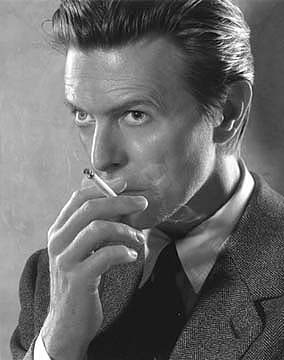
David Bowie: The 90s and Beyond


So there's simply no way to do justice to a musical icon such as David Bowie in a single post, so I'm going to concentrate on my favorite period of his music - the most recent stuff.

For me, Bowie just gets better with age. He's one of the few artists I can say that about. Most hit their peak early and spend long years trying to top their earlier success or are content to repeat past glories. While there's an awful lot I like from Bowie's earlier work (in particular the 'Berlin Triology' which I need to spend more time with) my favorite and I think most accessible music can be found on albums from Outside (1995), Earthling (1997), Heathen (2002), and Reality (2003). It's probably the fusion of rock and electronica that appeals to me most.

Let's take a closer look at each of these amazing albums:


  • Outside - This album was really a comeback album for Bowie in a lot of ways. He had a string of unsuccessful albums in the late 80s and kind of dropped off the radar for a while. Outside is a concept album of sorts dealing with his own freaky vision of the world at the turn of the millennium. Bowie toured this album alongside Nine Inch Nails in one of the more potent mix of double-headliners ever. Songs to listen to are: I'm Degraned, Hallo Spaceboy, I Have Not Been to Oxford Town, Heart's Filthy Lesson, and the title track.

  • Earthling - In my circle of friends, this was the one Bowie album you could count on everyone having. This is Bowie's "Jungle" album which is to say a particular style of techno. I remember rather heated arguments about whether or not this album actually counted as a techno album, or if he was really more of a copy-cat artist and didn't really "get" the style he was emulating. Doesn't matter to me, the music is fantastic and a wonderful fusion of many styles. Be sure to give a listen to Little Wonder, Battle for Britain, and Dead Man Walking.

  • Heathen - A decidedly dark album in places, the opening track might be my favorite Bowie song of all time, Sunday. After the experimentation of the last two albums, Heathen was a high water mark for Bowie's latter day sound and one of his most critically acclaimed albums in a long time. Besides the haunting Sunday, also give a listen to Slip Away, Cactus, and 5:15 The Angels Have Gone.

  • Reality - Continuing in the same vein as Heathen, but a bit more relaxed and prosaic, Reality is Bowie's most current album (2003) which means we're probably overdue for another! Although another solid effort, Reality doesn't quite have the impact of the previous few albums. You could almost pass up this album if not for the closing track, Bring Me the Disco King, which is close to the top of all-time favorite Bowie tracks for me. Also give a listen to the George Harrison cover, Try Some Buy Some, and the soothing Fall Dog Bombs the Moon.


Videos


Monday, July 5, 2010

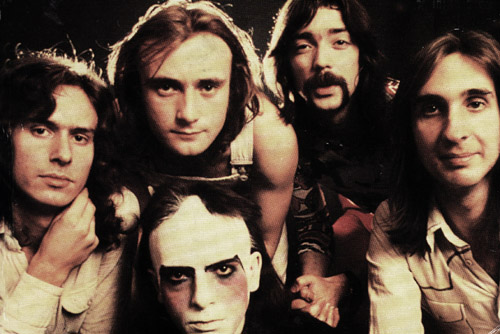
Genesis: The Peter Gabriel Years


If you're like most people my age (mid-thirties) forget what you think you know about the band called Genesis. In the early 70s, long before Invisible Touch and the balding Phil Collins took center stage, Genesis was a completely different band. With Peter Gabriel as front man and main lyricist, Genesis' first years were typified by theatrics, extended musical interludes, and often inscrutable words to match.

No major hits (at least not in the US) came from Genesis in the early 70s, but the band increasingly gained notoriety for their stage show, in particular on the Lamb Lies Down on Broadway tour in 1975. This would prove to be the last tour with Gabriel, as he decided to leave the band, afraid that he was becoming a prisoner of his own stage persona doomed to repeat eye-catching theatrics whether or not it suited him. I'll cover both Peter Gabriel's solo career as well as spend time exploring the Lamb album in its entirety but for now let's look at some solid-gold material from the first couple of Genesis albums.

  • Watcher of the Skies - From the album Foxtrot, this has to be my favorite song from this part of the band's history. Allegedly culled from Arthur C. Clarke sci-fi, this song was often an opener for the band's live show. Listen to the first 1:30 or so to hear some of the best Mellotron work anywhere. 1972.

  • Dancing with the Moonlit Knight - A line from this song gave its corresponding album's title Selling England by the Pound. Like several other songs, this one explores modern themes through the lens of English folklore and fantasy. Do a little search on the "Green Stamps" craze in England and the line "Knights of the Green Shield Stamp and shout" takes on a whole new meaning. Basically, it's a song about materialism and perhaps how mystery and wonder are lost along the way. 1973.

  • Supper's Ready - I will freely admit that this is a tough song to appreciate at first, not only because it's almost 25 minutes long, but also because I don't love each of its many disparate parts. The second half is my favorite where we are treated to a long jam in 9/8 time which transitions to a beautiful and uplifting ending. If you look at concert footage of this song, I think Gabriel goes through half a dozen costume changes to act out the various players in this operatic piece. If the first two songs listed above pique your interest, try this song out for a challenging, but very satisfying experience. 1972.

Video


Watcher of the Skies


Dancing with the Moonlit Knight


Supper's Ready (excerpt)

Thursday, May 6, 2010

The Clash - Combat Rock

In addition to bands, I'm going to write posts about specific albums when I feel like there's enough awesome-ness to warrant it. The Clash's Combat Rock is certainly in that category.

I like The Clash. I'm familiar with their iconic London Calling and Give 'Em Enough Rope albums but to me nothing can compare to Combat Rock. I suppose it's a little odd because arguably it's their least "punk rock" album. It's arty, experimental and a whole lotta fun everytime to listen to. Let's examine some of the stand-out tracks in detail:

  • Straight to Hell - A fantastic song with a strange, winding quality to it somewhat reminiscent of oriental music. Some great atmospheric qualities in this one
  • Overpowered by Funk - No, it's not a song about what happens when you don't bathe for a week (although that would be rather punk). Instead it's what the title implies - a funk song. And it's a good one! Not really disco-influenced, more a jangly, trebly form of blue-eyed dance music not unlike the music of !!!.
  • Sean Flynn - This one might be my favorite song on this album. Talk about atmosphereic - I always feel like I'm lying in a tent somewhere in the jungle just before an afternoon rainstorm. It's transporting to listen to.
  • Inoculated City - In simple, English-nursery-rhyme style these guys break down exactly how the military-industrial-complex works. It's a short, barely 2 minute track but a powerful one nonetheless.
So you might be wondering why I haven't mentioned the two tracks that this album is better known for: Rock the Casbah and Should I Stay or Should I Go. Partially, I didn't want to devote space here to every track but partly I don't think either one is where the album really shines. Don't get me wrong, they are both great tracks and deserve the acclaim (and radio play) they've gotten. I get off a little more listening to the four tracks I list above. Either way - run, don't walk and go get this album!


Thursday, April 8, 2010

Cocteau Twins


After my initial voracious consumption of music (roughly 1993 - 2001) when everything seemed new and exciting, I hit a lull and didn't really listen to any new music at all for a few years. Then around 2005 a renaissance of sorts began for me which more or less started with this strange little band from Scotland, Cocteau Twins. I think it was Treasure that hooked me and soon i heard Pearly Dew-Drops Drops and Sugar Hiccup which pretty much sealed the deal.

I was hooked in a big, big way. I still get the shivers listening to the lush, beautiful music that is Cocteau Twins particularly because of the very talented vocalist Elizabeth Fraser. Though her vocals are undeniably wonderful, her lyrics have been a cause of friction for some because many of them aren't in English. In fact, many of them aren't in any language at all and are instead pure vocalizations of her own unique design (although Lisa Gerrard and Enya have both done similar things). I don't care. I even sing along sometimes even though there aren't any real "words" to be singing in the first place. No matter - it's pure pleasure the whole way.

The band was active from roughly 1982 until 1998 when they agreed to part ways in one of rock's more civilized band breakups (no lawsuits, no members touring under the old name, etc). Although they've never been on the hit parade, their influence is deep and enduring. Many, many bands have imitated their sound but none have been able to capture its magic.

It's hard to choose just a few songs to recommend, but here are some of my favorites:

  • Pandora - from the album Treasure

  • Lazy Calm - from the album Victorialand

  • Sugar Hiccup - from the album Head over Heels

  • Fifty-Fifty Clown - from the album Heaven or Las Vegas

  • Frou-Frou Foxes in Midsummer Fires - from the album Heaven or Las Vegas

  • Know Who You Are at Every Age - from the album Four-Calendar Cafe


Wednesday, April 7, 2010

Metallica


Metallica was one of the first bands i truly got "into". I can remember listening to a tape of theirs on one of those crappy portable cassette recorders from the 80's with the speaker built into the unit. I got into them because my brother was into them and they were one of the bands the bad kids listened to during that time. So as an impressionable youngster it was a match made in heaven.

Metallica have been through many changes since their inception in the early 1980's and seem to have come more or less full circle with their latest album, The Death Magnetic. I don't much care for their 90's material (Load, Reload, etc) because it doesn't deliver on why I fell in love with the band in the first place: extended songs featuring virtuoso musicianship, dark sometimes introspective lyrics, and classical music song structures and modes.

As such, my listening recommendations sit squarely in their "classic" period during the 1980's. For me, the standout material includes:

  • Fade to Black - From the album Ride the Lightning. Years ahead of its time musically. Remember this was recorded in 1984, when Van Halen, Phil Collins, and Madonna were topping the charts.

  • Fight Fire with Fire - From the album Ride the Lightning. I like this song because of the cool classical guitar intro and the heavy, heavy sound after that. Again, ahead of its time sounding like something Cannibal Corpse or Slayer might do years later.

  • Master of Puppets - From the album of the same name.

  • Orion - From the album Master of Puppets. A long instrumental that really shows off the compositional skills of Metallica. Released in 1986, this is one of my favorite metal songs of all.

  • . . . And Justice for All - Basically the entire album. Some songs are stronger than others, but the band really nailed their sound on this album.


Other Albums
I haven't listed anything from Kill 'Em All or 'The Black Album' even though I do like both of those albums. I just feel that both are sort of "bookends" and don't display the real talent of the band or showcase their best work. If you want to hear the entire creative arc of this highly influential band, I'd recommend including both of these in your music library.

Again, I really don't like most of the mid-to-late 90's output. Clearly Metallica was struggling to find their audience and their muse in the wake of the huge success they had had and the sudden shift in popular music with the advent of Grunge. I haven't heard all of The Death Magnetic (2008) but it sounds a lot more like their classic material that anything released in recent years.